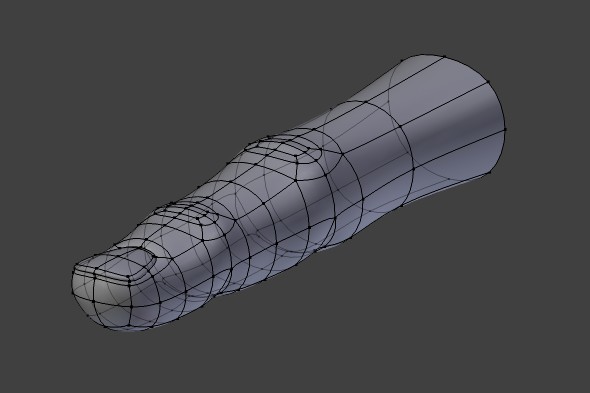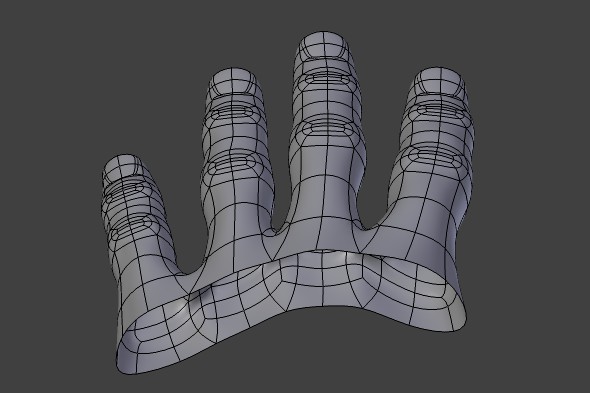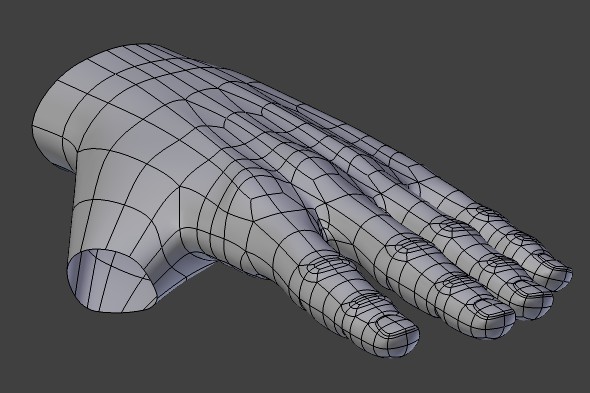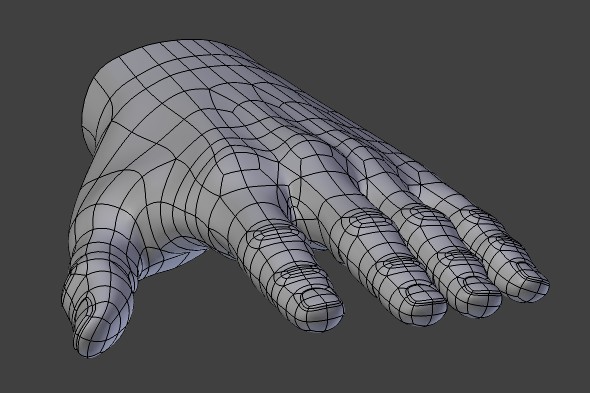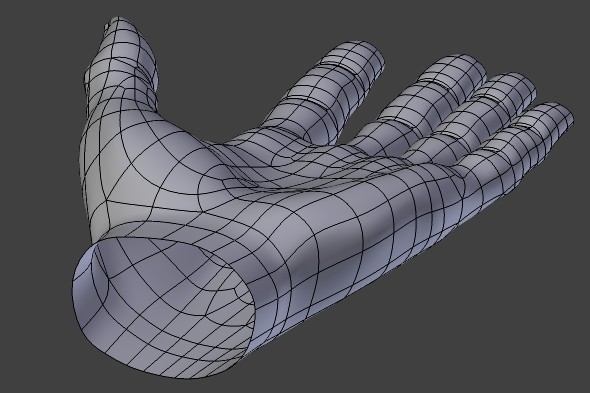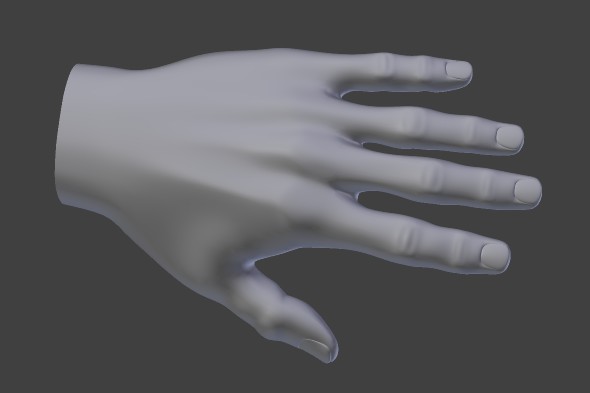
Update April 10, 2026 – When I first shared this hand modeling exercise back in October 2011, I couldn’t have imagined that my hand topology would be viewed as an example by other aspiring 3D artists, and even more surprisingly, be used for educational purposes in other parts of the world. I was teaching myself organic 3D modeling from whatever material I could get my hands on at the time i.e. books, articles and tutorials by experienced 3D artists, and wanted to show my progress. Since then, these images have been shared worldwide, both online and in print. Examples of the topology have been used to illustrate STEM activities, university courseware, and at times have been requested by students studying computational graphics. It still surprises me as there are many other examples available. Knowing that my own learning has contributed to someone else’s learning is incredibly inspiring and rewarding.
If you would like a copy of the mesh for educational purposes, drop me a line and feel free to buy me a coffee.
October 26, 2011 – The direction that my paintings have taken, naturally aroused my curiosity in new media and inevitably led me to begin exploring the world of Digital Content Creation.
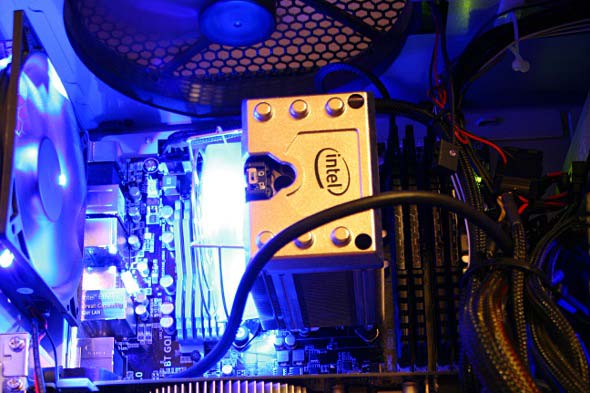
I had squeezed every last drop out of my old system, so a few months ago, I built myself a new-generation Quad Core system with plenty of RAM, decent graphics capability and sufficient room for future expansion, should the need arise.
I am particularly fascinated by organic mesh modeling and have been using myself, my family, and my good old anatomy books as reference to practice modeling in 3D. After some good practice, it starts to become rather intuitive, and then the addiction sets in…
The following example shows a few stages in modeling process. The result, a polygonal model of my own hand, using only quads to form the hand topology, shown here with two levels of subdivision. The completed base model will later be textured with colour and normal maps to add more detail, then rigged and skinned for posing and animation. All modeling was done in Blender, using a pen tablet.